Wednesday, 10 July 2019

Reflections on the Moon: 50th anniversary of Apollo 11

Fifty years ago Man first set foot on the Moon and things haven’t been the same since.


Technology and scientific aspirations have developed considerably since that first small step for man but giant leap for mankind happened in 1969. When Neil Armstrong set foot on the Moon 50 years ago there were no personal computers, internet or smartphones, or even colour television. Instead, we had our ears glued to our transistor radios and later our eyes followed the Apollo 11 astronauts via a delayed visual broadcast on TVNZ (BCNZ) of the Moon Landing.


The Apollo series of lunar flights ended in 1972 with Apollo 17 but the moon remains of interest to scientists and the public alike. In many ways, we have all benefited from the boost to technological advances that challenges of getting to the moon and back safely demanded. Many people still remember where they were and what they were doing when the event happened. Many others have been born since and are working with new technologies in astronomy or physics, that could one day manifest in new explorations beyond Earth orbit and the Moon.

The following reflections have been collected from past and present University of Canterbury staff and students.This year will mark 50 years since Neil Armstrong and Buzz Aldrin walked on the Moon 20 July 1969. Many universities and research centres are marking the anniversary. The University of Canterbury has a strong history in engineering, astronomy and physics and is currently developing a space research cluster, along with many space-related projects.


The first Moon landing
At the time of the NASA Mercury and Apollo Space programmes, there was a battle of ideologies and national political egos between the US and the USSR. It was the Cold War and who would dominate Space? After Sputnik was launched by the Russians in 1957, and the first man (Yuri Gagarin) went into orbit in 1961, it seemed the USSR had won and was capable of dropping weapons on anyone, from space. This was enough for President Kennedy to up the ante and announce the Moon Landing programme in 1962. 

After Apollo 11’s Neil Armstrong and Buzz Aldrin walked on the Moon, took photographs and brought back Moon rocks, the US had won that race so space exploration stopped being political and became scientific. The last Apollo landing (Apollo 17 in 1972) included the first scientist, a geologist, to set foot on the Moon.

“Society came together to witness a major milestone. It was impressive. The first publications I remember in my parents’ home were of the Moon Landing. I have been steeped in the stories and watching it on television. I’m into the Moon,” says UC research engineer and Associate Professor Allan Scott. 


“I’m a geologist by training,” says another UC research engineer Dr Matthew Hughes. “My dream would be to provide science and engineering that enables people to live elsewhere than Earth. From the Moon we can trial technologies to go to Mars.” 
Watch this cool video that explains the rocket experience of the launch as you've never seen before -  https://www.youtube.com/watch?v=RDtE8RaEI6Q

Alan Gilmore, retired Mt John Observatory superintendent and star observer, remembers that he heard that the Eagle had landed just before he went to work that day. 

"After the landing there was a comment from Mission Control that the guys there were turning blue from holding their breaths as the lander used most of its fuel seeking a suitable landing site. There was a quip that the astronauts having to climb into space suits in the tiny lander was like two women getting into ball gowns in a telephone box."

“It was hours after the landing that we finally got to see film of it via television. The pictures we saw on TV of the Moon Landing were recorded on film at the Parkes Radio telescope in Australia. A Canberra Bomber flew the film to New Zealand for the TV News,” says Gilmore. 

Video of the components of the craft and rocket needed to get men to the Moon https://www.youtube.com/watch?v=8dpkmUjJ8xU

Bringing back large quantities of Moon rocks during each Apollo mission was extremely useful to scientists as it provided a chronology of Moon activity and increased understanding of the planet Earth.
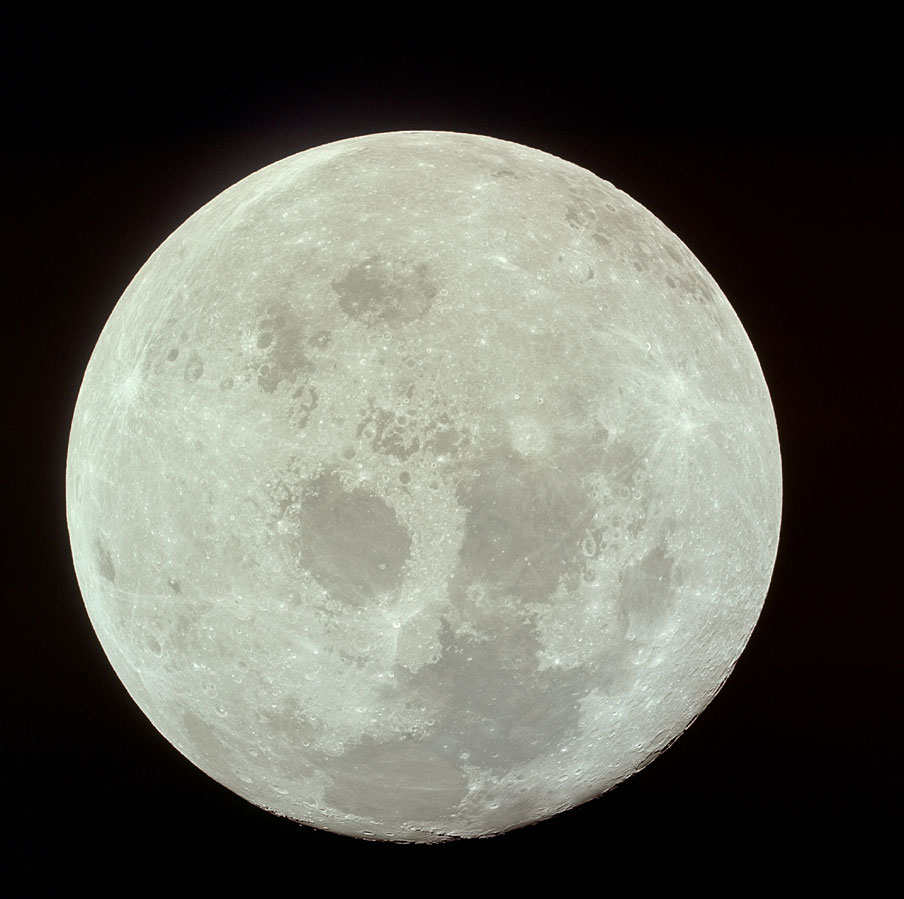
 
“There was a Great Bombardment of the Moon, which ended 3.8 billion years ago, followed by magma eruptions that created the ‘seas’ we see on the surface of the moon today. Those seas are craters that have been filled with lava. The rocks are remarkably similar to the Earth’s crust so we know there was a common origin, which lead to the idea that the Moon is the result of an impact from a Mars-sized planet that knocked a chunk off the earth. Minerals in the Moon rocks are extremely dry which indicates they are the results of minerals reforming from the impact, from a lot of vaporised rocks,” Gilmore says. https://www.youtube.com/watch?v=WGTBJHFNywI  Birth of the Moon

Scientific advances through solving epic technological challenges put the rocket under the development of guidance and navigation systems, calculating trajectories, moving from transistors to integrated circuits, developing special smooth coatings. UC staff and students respect but don’t dwell on the past; they are busy working on new challenges that follow on from what has gone before. 

How the Saturn V and the Space Race were born https://www.popularmechanics.com/space/rockets/a26013658/saturn-v-rocket-wernher-von-braun/

Evolution of The Moon (good NASA video) https://www.youtube.com/watch?v=UIKmSQqp8wY

My own thoughts and context: Naturally, I have been thinking back to my own experiences of that time; watching a delayed broadcast of the landing during science class at high school. Later, in my early twenties, I was seriously into making models of the 3-stage Saturn V rocket, the moon lander, the space shuttle, and even Star Wars planes. In my mid 40s I had the opportunity to visit the Kennedy Space Centre and see actual Saturn V rocket engines up close. Their size and engineering are awe-inspiring. I also saw a Space Shuttle on the launch pad.  The space programme left an indelible impression on me and it has been a privilege to be able to speak with researchers and scientists who are now contributing to what comes next.

So, in my next post I'll be talking to scientists and researchers from the University of Canterbury about what's new and where humanity is heading.

Below: putting things from 1969 into personal context - me in 1969 at Papanui High School, Christchurch NZ first on the front row, and then in costume performing in the Marriage of Figaro.




Monday, 8 July 2019

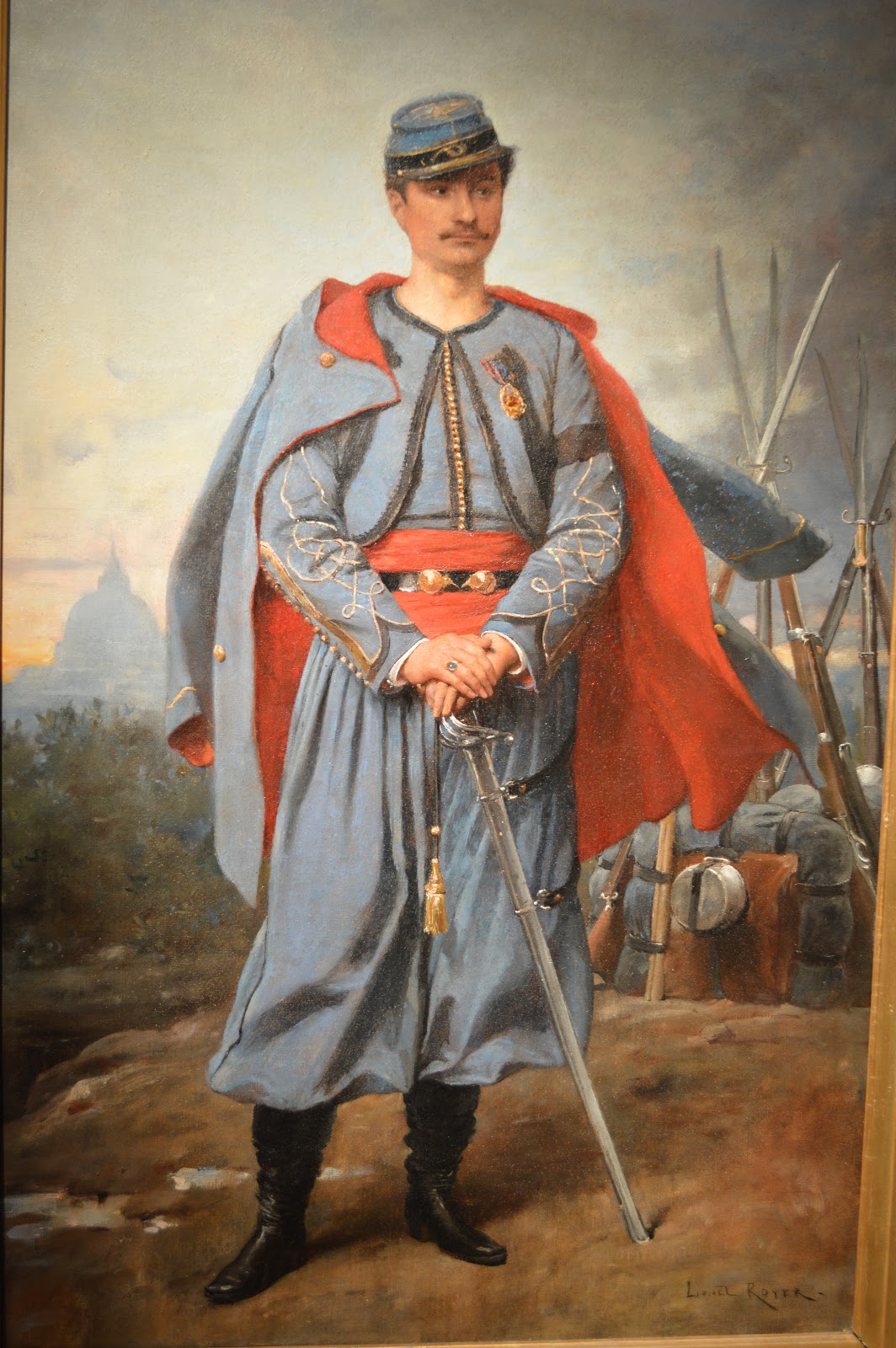
Franco-Prussian war 1870 - Museum

The world has known so many wars but few could be considered so pointless and wasteful of human life as that of 1870 when the Prussians deliberately provoked France into declaring war, then invaded France, and I believe it contributed to the 'gutsful' the French must have had by the end of WWI when the disastrous Treaty of Versailles was signed to punish and humiliate Germany, ultimately leading to WW2. So, for me, the beginnings of the dreadful World Wars start here.

A little museum dedicated to this war is located in the town of Loigny-la-bataille where a large battle was fought between France and Prussia. It was the time of the Second Empire in France headed by Napoleon III. At this time the German states were not united but they certainly were after this so Bismarck got what he wanted - to draw the independent southern German states together into an alliance with the North German Confederation dominated by Prussia.

The German coalition mobilised its troops much more quickly than the French and rapidly invaded north-eastern France. The German forces were superior in numbers, had better training and leadership and made more effective use of modern technology, particularly railroads and artillery.

Incredibly, the French troops were so ill prepared that the officers didn't even have maps of France to refer to. The Germans committed atrocities against civilians which really stirred things up. How wars were to be conducted had now changed.


A series of swift Prussian and German victories in eastern France, culminating in the Seige of Metz and the Battle of Sedan, saw French Emperor Napoleon III (nephew of Napoleon Bonaparte) captured and the army of the Second Empire decisively defeated. Napoleon III sought exile in England, where he died just a few years later. A Government of National Defence declared the Third French Republic in Paris on 4 September and continued the war for another five months; the German forces fought and defeated new French armies in northern France.

Following the Seige of Paris, the capital fell on 28 January 1871, and then a revolutionary uprising called the Paris Commune seized power in the city and held it for two months, until it was bloodily suppressed by the regular French army at the end of May 1871. During the fighting, the Communards killed around 500 people, including the Archbishop of Paris, and burned down many government buildings, including the magnificent Tuileries Palace and the Hotel de Ville.

The German states proclaimed their union as the German Empire, under the Prussian king Wilheim I, finally uniting Germany as a nation. The Treaty of Frankfurt of 10 May 1871 gave Germany most of Alsace and some parts of Lorraine. This remained a highly sensitive and bitter  topic for many years until Alsace-Lorraine was reclaimed after WWI.

So many thousands of conscripted soldiers as well as civilians died for a piece of land that might have just stayed French and saved everyone a lot of heartbreak over the years. 

The museum presents things very nicely and in many parts they have made an effort to use descriptions in French, German and English. 

A pipe was on display - an example of a Christmas present for German troops during the war.

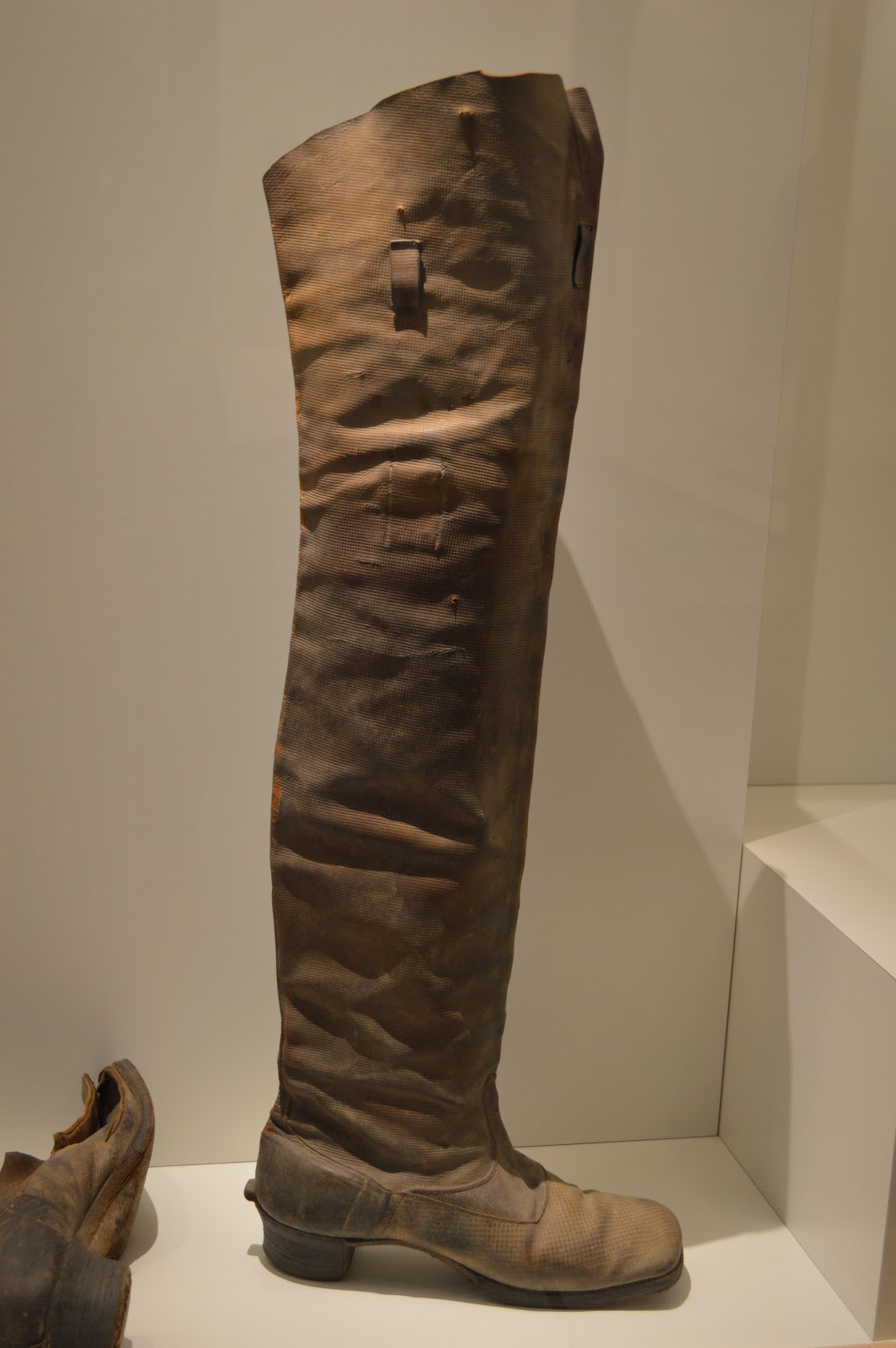
There are several rather poignant displays in the museum such as honoring one of the military leaders (de Sonis) who lost a leg. His boots are on display; one is untouched, the other in a bit of a state where they cut it off his damaged leg. His wooden leg is also on display.


Beside the museum is a church which is dedicated to those who lost their lives in the conflict. The crypt contains the remains of French soldiers. Most of the skulls and hip bones are riddled with bullet holes.


 The Franco-Prussian war applied the principles of the Geneva Convention which was signed in 1864. And so, the neutrality of the wounded, their transportation, doctors and care personnel were fully guaranteed. The 1870 war was also the first conflict in which the Red Cross distinguished itself.
For more info in English go to http://www.museedelaguerre1870.fr/en/the-war-of-1870-and-the-fighting-in-loigny/
https://en.wikipedia.org/wiki/Franco-Prussian_War


Sunday, 30 June 2019

Medieval Farm Garden - Jardin de Bois-Richeux

The Bois Richeux farm is one of the oldest farms in France. It is located outside the village of Pierres, near Maintenon in Eure-et-Loir.  Around since the Celtic times and druidesses such as Richeulde (who gave her name to the place), the farm and gardens have a very interesting history dating back to the 12th century. 

In 1178 Hugues de Boutigny, Lord of Gallardon, gave part of his land at Bois Richeux to the Chapter of the Cathedral of Chartres.  It was one of the first fortified farms to have a dovecote, which is still standing. The well at a depth of 68m in the centre of the courtyard has been closed over with a tufty plant for safety reasons.


In Carolingian times there were almost 500 peasants working on the farm. In the middle ages the lords of  Gallardon and Monfort L'Amaury erected a chapel at Bois Richeux on return from the first crusade. The chapel has been destroyed and in its place is a hormbeam-lined alley with benches you can sit on. It's pleasant on a hot day.
 
In 1679 the farm was acquired by Madame de Maintenon, the secret second wife of Louis XIV. The papers were countersigned by Louvois in the name of the king. In 1689, the niece of Madame de Maintenon (the latter had no children of her own) received the farm as a dowry on the occasion of her marriage to the Duc de Noailles and for more than three centuries the farm remained legally attached to the Chateau de Maintenon. 

Today the farm is private property. It is not possible to see inside the buildings, other than the reception area and the concert hall/previously the grange.

The medieval gardens were reestablished in 1996 from descriptions in archives dating from the 13th century. They are split up into 3 sections. Firstly, there are the formal gardens, which are marked out by trimmed hedges, made up mostly of plants that were used for medicinal purposes. You also come across the aromatic gardens which contain plants that are used to make the renowned Bois Richeux 1178 perfume.
JC bought me a bottle. Its scent is vegetal rather than made of flowers and it lasts a long time on your skin. It's not unpleasant and could be used for men and women. The top notes are basil, thyme, lavender and mint. The heart notes which form the body of the perfume are camphored rosemary, fennel and anise, celery, laurel/bay, sage, amber and musk. It's the latter which lasts the longest.


Lastly, there is the vegetable patch where edible flowers can also be found. The garden was suffering from record-breaking temperatures in France but was still lovely with its arches covered in roses, grapes, honeysuckle and sweet-peas.

Another interesting feature of the farm is the individual dog niches or kennels built into one of the farm buildings. The dogs were used to guard the sheep.

The farm sits on a rise and you can see La Beauce (the cereal-growing area of France) stretching out around 360 degrees. No wonder it was a fortified farm in olden times. 

Entry costs 6€, parking is easy but I do think on hot days there should be the provision to buy cold drinks since there are tables and chairs available outside.
https://www.boisricheux.com/

Wednesday, 26 June 2019

Grottes du Foulon - a Jurassic cave


Located under the town of Chateaudun, 125km south-west of Paris or 40km south of Chartres, this limestone cave is unique in the world for its marine geodes of quartz and calcedony (microcrystalline type of quartz occurring in several different forms including onyx and agate). 

The whole area was once under the sea. The floor is of the Jurassic period with the rooms carved out by streams, though the water has long disappeared. It's not a very humid cave. There are no stalactites nor stalagmites but there are plenty of geodes formed from sea sponges that became covered in sediment and fossilised. There's a layer low down in the cave walls which we were told marks the disappearance of the dinosaurs. We saw branches of giant fossilised coral embedded in the ceiling and fossilised remains of a large marine animal skeleton that was discovered just a few years ago.

During a heat wave or a rainy day this is a cool place to be. The temperature inside is always 12 degrees C year-round. 300,000 years ago in paleolitihic times, humans thought this was a good place to be too. There's a display of primitive human tools from various eras, near the entrance. The cave consists of various pillars, galleries and a large vaulted ceiling known as the giant's cauldron as it was probably caused by a river spiralling through a natural chimney.

We took a guided visit which was conducted by the owner. He speaks very rapid French so I understood only 50-60% of the commentary. However, he did agree to let me take some photos at the end of the tour. Normally photos are forbidden. The coloured lights at the end of the tour display the cave's features quite nicely. You can buy minerals at the little shop or have a snack. Remember to wear a jacket as an hour inside the cave at 12 degrees C is chilly. Guided tours occur at 14h, 15h and 16h most days.
Chateaudun has a notable chateau to visit and the town is also interesting.

http://www.grottesdufoulon.sitew.com/#animation.A

https://www.youtube.com/watch?v=3gQKLkS8jBc

Saturday, 22 June 2019

On being an expat repat - it's emotionally challenging

A repat is someone who comes back to their country of origin after living overseas. An expat is someone living overseas. At the moment I seem to be an expat repat.

I came back to NZ because I had no other options but now I'm back in France trying to work out what I should do for the rest of my active life. Some folks come back to NZ because they can create their comfort bubble there and that's fine. Others like me with limited resources, few family ties and the bulk of living behind me struggle to find their place there. I've experienced major reverse culture shock. I seem to be experiencing multiple iterations of it now and I feel I've lost my way. There is no solid ground. There is no happy place because neither option really works for me. This sort of confusion might be understandable in my situation but it's highly unpleasant and could last years.

Like many repats I came back to a country I couldn't feel settled in. I'd changed and so had NZ and there was no putting either back in their original boxes.

After 19 months back in NZ and 3 changes of address, constant financial stress building a house alone while mostly unemployed and having only 2 very short-term work contracts which meant I couldn't belong 'at work' either, I suppose it's not surprising I feel I don't know where to belong. Well actually I do - at a soul level it's France, but without the means to stay here independently I don't know what I can do about that.

Currently I am spending 3 months with Jean-Claude to see if I will eventually decide, one day, to come back to France and him, somewhat long-term but probably not permanently. Ours has never been an ideal situation, especially for me so there is a lot at stake. It's me who would be taking a major risk.

I might possibly get the opportunity to stay with Jean-Claude long-term one day if I can get past some of his recent trust-busting and controlling behaviours but that would mean never having my own stuff, my own environment, always being dependent on his money or wants, only ever having his lifestyle and never mine, often being bored. It's unsettling to contemplate the best part of what is left of my life, struggling to have my own life and way of doing things. And in the end, due to his probable future demise or illness (since he's 10 years older than me), having to leave France anyway. That's a heavy price to pay despite my feelings for him and my soul country. He knows my situation is difficult.

Living alone on the breadline in NZ isn't appealing either so I don't know what is best. I'm probably a late bloomer. I want to experience international things, have fun, meet people, feel part of the rest of the world, be employed. I have none of that sitting alone in my new house in Rolleston NZ every day. The usual strategies haven't worked, so here I am, back in la Beauce, Centre, taking a chance, putting myself through an emotional wringer just in case something great can come of it.

As expected, I am not missing New Zealand. Yesterday we were cruising down the road to Chartres, watching the cathedral spires getting bigger and bigger in the distance while listening to 17th century French classical music by famous court composer Lully. Louis XIV knew how to pick talent. I love my European roots, the history, the culture, the supermarkets with choice to die for. Around every corner there is something of interest for me. My soul is comfy here but my head and heart know there is no clear and happy choice to make right now.

Alas, for some time I have realised I just don't fit in with the 'kiwi culture'. I can't stand sport (especially Rugby), I'm not into the great outdoors (other than gardening). I'm sickened by the shameful statistics on key aspects of life in NZ - suicide, rising problems with mental health, domestic violence and abuse, child torture and murder, environmental destruction on a horrifying scale (just drive from Christchurch to Rakaia), binge drinking, methamphetamine everywhere. I watched a trailer for a new TV series which seems to be set around West Auckland. It shows people behaving very badly, using violence to get their way and who seem to lack reasonable diction, education and quality. Is that the reality of NZ? Is that nastiness and lowest common denominator what entertains kiwis nowdays?

What on earth is wrong with so many kiwis they can't just get on and be decent people caring for themselves and others in such a small country? Things have got worse. Don't say the problem is beneficiaries because I'm often one too now and it's impossible to live on the benefit. That doesn't make me a no-hoper or horrible person. The hate speech that trips off social media posts is appalling. The divide between the comfortable and the strugglers (through no fault of their own) shows the utter contempt the haves have for the rest of us. The price of living in NZ is criminal. You can't survive on pretty polluted scenery. What happened NZ, while I was away?

Other countries have their dark sides too, including France, but here in France the OECD kiwi stats make their jaws drop. They can't understand how a country like NZ can have an undercurrent like that. Family is important to the French and children are at the centre. They know how to eat and drink, for the most part, sensibly. Snacking between meals is frowned on and warned against so people tend to be less overweight here.

I don't know how to reconcile living in NZ with my own set of values and my struggles to financially survive there. It makes soul-searching on what to do with the rest of my life more complicated.

While I was on a short term contract recently, writing for the University of Canterbury, NZ national statistics were released that showed one in three university students in NZ are sexually abused during their studies. One in Three (mostly females, abused or assaulted by 'entitled' males). https://www.stuff.co.nz/national/113090659/a-third-of-women-university-students-report-being-sexually-assaulted-what-do-we-owe-them
The bullying statistics in schools came out too. It's horrific. For goodness sake, NZ. Then there are the kids with no food. At least in France every kid gets a cooked lunch in school. There are even separate Muslim menus for school kids in this secular country.

I wonder what the solution is? I think a good start would be to make it easier for 'real' people to help run the country and make fair but firm decisions. Make the elections cycle longer so politicians can get stuff done without constantly concentrating on what will get them re-elected. Get rid of the career politicians so out of touch with what the rest of us experience. That goes for both France and NZ. But, it ain't gonna happen. Things would have to be completely overturned by bickering masses and there would be a lot of harm in the process. I would like to be given a realistic opportunity to make a positive difference but I'm going to run out of breath before that happens.

In the meantime, I'm trying to keep my options open until a clear path reveals itself, if it ever does. I'll make the most of temporarily re-experiencing the parts of my old life in France that worked for me and try to look past the bits that don't, for now. I'll keep bathing my soul in the country I should have been born into, appreciating my French citizenship and all those French and Kiwi folks who show me kindness and interest from time to time.

And there will be those sublime moments like listening to music that was composed for Versailles in the time of the Sun King, or checking out what's happening with Notre Dame in Paris or making a pavlova for a Frenchman who likes having me around, or making home-made raspberry jam from plants I planted here 5 years ago. Things I did so any months ago. Those are the moments I live for.

Looking ahead to the next few weeks, I expect to be tutoring a young lady in English who is preparing for a competitive exam, visiting a few historic places of interest, refreshing my French language competencies, renewing some old friendships, giving some palliative care to an old dog, helping JC with his garden and reflecting on life past, present and what might be ahead. I'll also be reflecting on and writing about a major scientific milestone about to celebrate its 50th anniversary next month.

http://www.kivaprogram.net/nz/news/new-zealand-bullying-statistics
https://www.nzherald.co.nz/nz/news/article.cfm?c_id=1&objectid=12230188
https://worksafe.govt.nz/about-us/news-and-media/workplace-bullying-and-harassment/ 

Tuesday, 28 May 2019

Landscaping - the Wild West in NZ


Any new home needs landscaping. You need to cover the ground to avoid weeds, mud and dust. The other reason is the covenants imposed by developers. Having paid a lot of money for a designer to transfer my drawing to their computer software, as required by the developer, to progress my house plans to the Council, I have been surprised by what happened throughout the projects.

Most residents in NZ who build a home have no interest in gardening. They seem to think a garden is a line of grisilina along the fence line and some box hedging up the front path.There is no interest in diversity, the balance of insects, feeding themselves with fresh food and no effort at being sustainable.

Not everyone has gardening as a hobby, of course, but I am dismayed that natural beauty and sustainability are not of importance to so many ordinary kiwis. I wanted both things. After choosing a landscaper recommended by the designer I found progress totally dependent on me chasing things up. Getting the base landscaping required co ordination with the builder. This was not seamless and slow delivery of my pergola wood really held things up.

Eventually things commenced but it was ALL supposed to finish for Christmas. A week before Christmas my landscaper told me he'd be finishing up that week, he had a lot on, so I would have to wait a couple of months for Christmas, New Year and his extended holiday.

I had added in a garden shed to be installed but everything else was per the plans. At least the front fences were done so I could paint them over the break and the irrigation of my flower beds was complete but there was still a bit to do. Oh and they broke part of the fence with a truck and put a hole in my stormwater system. Both of which they had to repair.

Then the lawn guy decided his bit would take a few days and it would be too much of a stretch to complete his bit by Christmas. I'd have to wait quite a long while as he was busy with his hobby rather than working after New Year. Sigh!

I didn't hear from my first landscaper though I had always made on- time progress payments. I gave him some leeway but eventually needed to call him as I needed lawns to be laid  by my lawn installer.

The landscaper arrived with a partially different and smaller crew. The most competent team member was now working elsewhere and I was left with two guys who spent as much time off site fluffing around getting supplies as they spent on the job. Sometimes they were gone 3 times a day and like many contractors the days are somewhat short.

The kitset garden shed was a standard Duratuff. It took them 8 hours to put it together, and rather badly too.

The landscaper knocked on my door just after completion and demanded $2500 extra. He said the bill for the driveway and paths was more than he expected so I would have to pay up. After all, he had done his best for me, had generously allowed me to have the leftover concrete as a pad for my shed so I had to be reasonable.

As a long-term unemployed person trying to survive and complete my only asset I was shocked and horrified. I told him a quote is a quote and I had no more money. He wasn't sympathetic and still expected the extra money. I was very upset and feeling vulnerable but my neighbour told me to stick to my guns.

Hard as it was I needed to. The landscaper finally gave in, muttering his business might go to the wall because of me.

I contacted my lawn installer who also had not kept in touch. Poor communication was a hallmark here. He had provided a quote but mistakes by the original designer who hadn't bothered to even visit my site when she did my plan meant she hadn't realised there was no council footpath. This meant I was responsible for landscaping quite a slice of land in front of my house. More expense, so I suggested the lawn guy come back to redo his quote. This time I was going to have gravel paths around my veggie beds so there was less for him to do out the back and a bit more in front. It pretty much evened out and I accepted a separate quote for lawn irrigation but the state of my lawn areas was a disgrace.

The first landscaper had lost interest and hadn't made it level. The lawn guy hadn't been in a hurry to start the job and so the lumps and bumps were covered with weeds and rocks which I tried to deal to as best I could. I needed to pay the lawn guy to do what I had paid the first guy.

The day before the lawn guy was due to start putting in the lawn irrigation tubes my neighbour and I barrelled gravel around the paths around my veggie beds after I had laid the weedmat. It was hot, heavy work which my lawn guy knew I was doing. He popped over to drop some boxing off. But when he started the irrigation the next day, his team started digging up my gravel paths, dumping dirt on them. The whole point of gravel and weedmat is to avoid dirt and weeds. I pointed this out and was reprimanded stiffly by the lawn guy and told not to hold up his team, not to create problems and stop commenting, they knew what they were doing. If he had told me he was digging up the previous day's work (he had seen me in action) I would have left the gravel off for him and made things easier. I found that every second meeting he was like Jekyll and Hyde. I'd lost a certain trust in him.

Things continued and the lawn was going down at last. Suddenly he packed up the lawn product back in his truck and took off saying he would finish the next week. Then I received a text saying he had run out of product and it would take a week to order more from Auckland. That was disappointing but what could I do?  And then came the knock on the door. He had to use more product than quoted so I would have to pay for more. His measurements weren't correct. He got nasty about it. I went inside to get the quote, came out while he was collecting his tools but he said said he didn't have time to discuss that with me, he had better places to be and that he had been more than generous with his time and given me what I wanted and listened to my ideas. HuH???? Isn't that what you do for clients?

My neighbours told me that if I had not been a woman on her own, if there had been a guy standing behind me, none of these jerks would have tried to extort more money.


Yet more nasty financial pressure. Again, my neighbours offered moral support and said stick to the quote. Ten days later he was back. He knew he had made a mistake but I had no trust at all and didn't want to have to deal with him. I told myself to hang in there and see it through. Meanwhile I had popped out with my neighbour to check out a nursery and as we returned they stopped to talk to their hydroseeding lawn guy. I sat quietly and listened but my jaw dropped when the lawn seeder said a guy he knew well in the lawn business was having a problem with a client. As the conversation I was listening to progressed it was clear the gossip concerned me. The whole thing was unprofessional. Even the seeding guy felt a quote was a quote. My neighbour nodded over to me so that the seeder stopped speaking abruptly. Shame. I'd have liked to hear the rest of the gossip.

Months later I now have lawns that look quite good except for some bare bits and some dying patches. I hope those will repair once Spring arrives.

Welcome to the NZ Wild West aka some landscaping contractors. I'm sure there are some good ones. I can only shine the light on my experiences of this very expensive stage of building a new home.They have no shame or decency. Their customer service is dependent on their moods. They leave upset and worried clients in their wake and they gossip. They gossip with other trades about clients and sometimes it gets back to the clients via a third party. Their clients take a back seat to these guys' hobbies so projects that should have taken 2 weeks can end up taking 5 months.

Some of my neighbours are less than happy with landscapers too. New subdivisions are ripe ground for ripoffs and dishonesty. The quality of work is extremely patchy and the quote prices are often astronomical. My lawn quotes had a range of $10,000 between the lowest and the highest. Allow at least 10% of the cost of your house build as the additional cost of landscaping.
This has been a horrid experience. Beware.

Thursday, 28 March 2019

The Residental Possum Trapper - ahh, those issues

Eliminating possums from your suburban property in the middle of a sparkly modern subdivision is anything but simple. You might catch the odd one in a Timms trap but sooner, rather than later, you are going to hit some barriers to progress. You might even fool yourself into thinking you've got them all, or maybe that you can't win so you give up and plant your backyard in boring grass and get a dog to stop the Aussie incursions.

Is that the kiwi way? In my experience that's what many of the residents of my street did, well, the ones that had anything like a garden to be destroyed. Most people's gardens in subdivisions aren't really gardens at all. They are just the same old green sticks marching in a row around the perimeter of sections. Naturally even the Aussie furballs disdain to spend time there, seeking more delectable offerings. Complaints to the developer fell on deaf ears so folks gave up. No-one except me has ever pursued this problem in this very large subdivison.

I worked with Dave the hunter, experimenting with traps and baits and strategies. Together we negotiated past herds of curious cows, stretched our groins to the limit trying to get over wire fences to look for Aussi corpses, checked bait lines, then trap lines. In total we eliminated 16 possums and we hope we've got them all but realistically we know we might have missed some and one day they'll be back to devastate my little paradise so I'll need to stay vigilant and hope Dave will always be there to call on.

Yes, I killed at least five on my property but it took a strong stomach, tons of stress, lots of discipline and determination and, quite importantly, regular guidance from a pest professional. My souvenir that still remains is a dried out corpse behind my back fence (see photos) of one that tried to get away. But I got you, you bastard.

Please understand this: I DID NOT SOLVE THE PROBLEM by putting traps in my garden. The problem has been solved by leaning on the person responsible for the whole desperate drama: getting the property developer who owns the land where the possums lived to get rid of them.

I spoke to the Rolleston Residents Association; they were surprised there were possums but then they'd all lived here for 20+years, not in a swanky new subdivision. They sent my concerns to the district councillors but none of them bothered to contact me. I spoke to an ECan staff member who told me he got only eight complaints about possums per year so urban possums aren't an issue. REALLY??? But then he went on to say we all need to work together to eradicate them as per Predatorfree NZ, and then he contradicted himself by saying public interest is fleeting so public campaigns don't really work. I told him my theory as to why he wasn't getting complaints from residents and it had nothing to do with the number of possums.

Members of my street had complained to the property developer and got nowhere. Somehow they never thought to go further and complain to Ecan, DoC (who do nothing in urban areas even though they are charged with possum eradication) or the Selwyn District Council.

I obtained an appointment with Amy Adams MP for Selwyn. We got on surprisingly well even though I will never be a National Party supporter. She's a country girl who understands a bit about possums but said she learnt a few things from me. She suggested I talk to Selwyn District Council as she felt they had the power to put conditions on approval of subdivisions, maybe to ensure they were pest free before releasing the sections for sale?

I visited the planning department at SDC and they made it clear this is not the case. There are no legal avenues whereby they can put such conditions on a resource consent to a developer. They can't even put a warning note on a PIM to alert would-be section-buyers about possum infestations so there is no warning for folks like me. You buy in good faith but maybe there isn't any of that. Conflict of interest? Probably, since SDC are in very public partnership with the developer.

Amy suggested I put some heat on Eugenie Sage, Minister for Conservation, to allow biotechnology to be developed. What that might mean would include tinkering with genetic modification. Eugenie's Green so she won't have a bar of it. In the meantime NZ's natural heritage is rapidly being eliminated. I don't like the idea of gene technology but after this possum experience I'll accept anything that saves NZ and protects what little biodiversity is left. It's use technology or lose NZ. The choice is clear and we've already lost most of it in recent times. Eugenie doesn't respond to any of my communication channels.

Without support and help from anyone I've run out of steam and paths to tread. Can't say I've had any thank yous from the residents down my street for giving them the opportunity now to have a decent backyard.

Well, at least my garden is growing, that is, except my fruit trees that were so damaged they cannot even grow normal leaves. The leaves are a third the size they should be and there is no growth in tree size. They all are a fraction of the beginner size I bought last year and the shredded leaves are still visible on my roses and camelias. Who cares? No-one, it seems, except Dave, the kind professional hunter who helped me for a time to change traps (most of which did not succeed) select bait flavours ranging from licorice through peanut butter and cinnamon and shared his knowledge, even the distasteful bits, about the secret lives of possums.

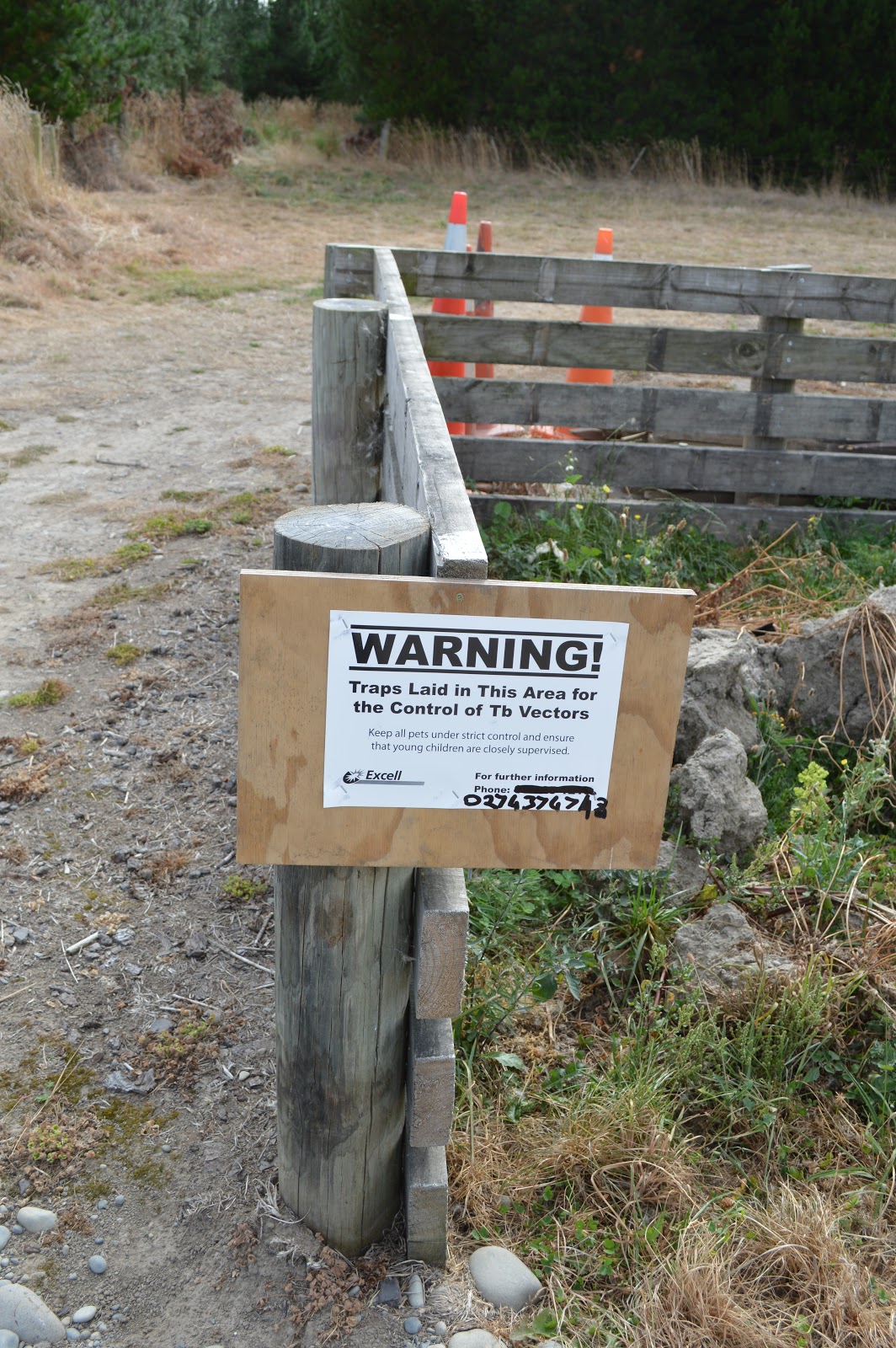
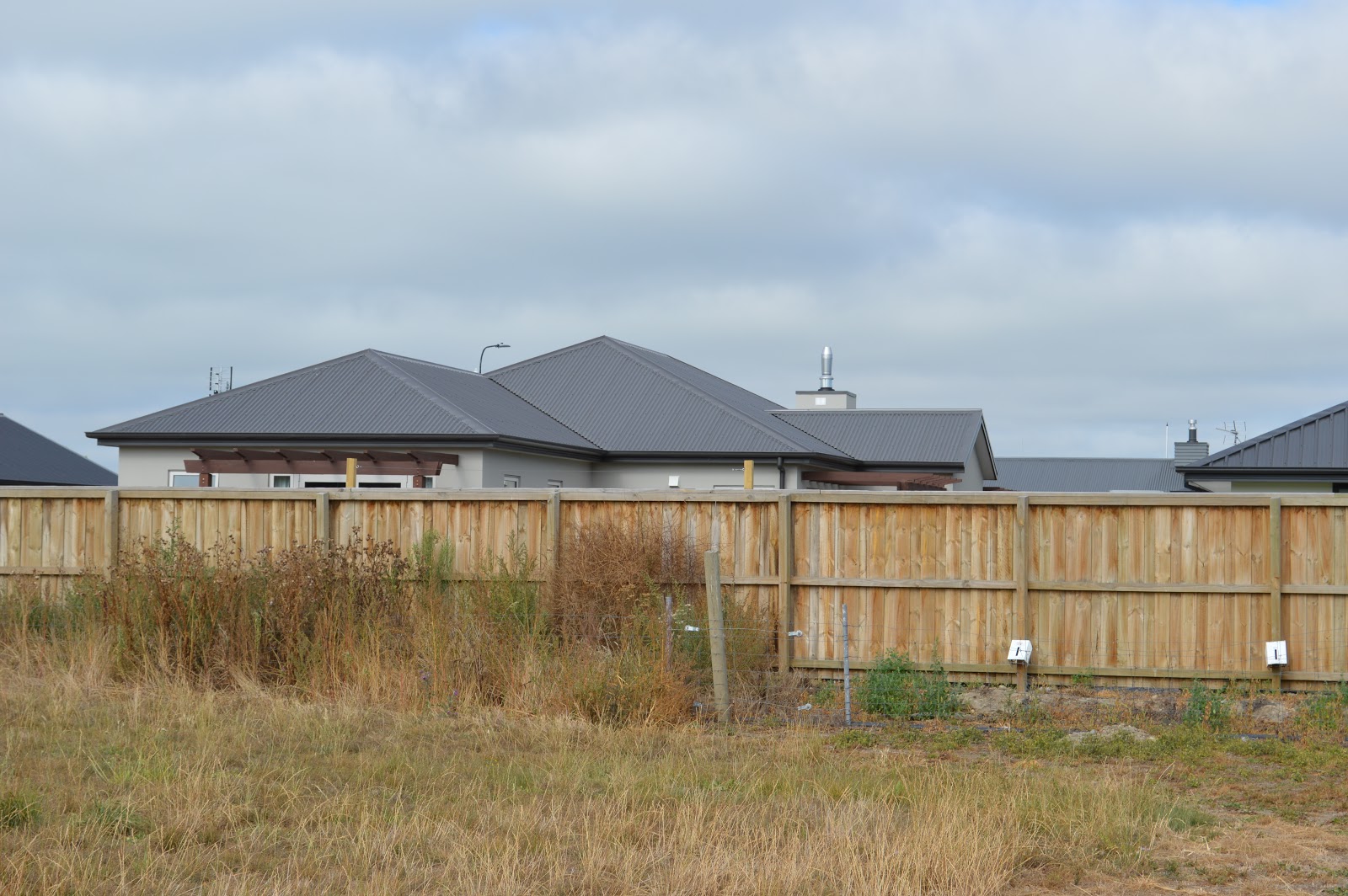
Photos include: live and kill traps. the trap line down my street behind my house,one of the offending land parcels where the nasties were based. They cohabit with cows quite well as cows keep the grass short, which the possums prefer, so it's no wonder bovines can get TB from possums.