Sunday, 6 March 2022

OHS-Leaving the old life for the new


 Being in a queue for open heart surgery requires emotional adjustments. It has been a long and challenging road from speaking to a heart surgeon in October, through months of no date for surgery, to a then cancelled date. Now I'm hoping it is finally going to happen.

Don't get me wrong, I am in no hurry to have my chest and ribs cracked open and all that goes with that. I like the way my chest looks and feels but I know that this current life is very finite. I feel the mortality growing each day as I become more breathless, lose more muscle mass and become more and more sedentary with lower quality of life. 

There is a lot of open heart surgery done in NZ and around the world but for ME this is not routine. I have no truck with platitudes and prayers. This is the most dangerous thing I have ever undergone. Statistics do not apply well to individuals so I joined a couple of Facebook support groups:  The Zipper Club   https://www.facebook.com/groups/2256590992/?hoisted_section_header_type=recently_seen&multi_permalinks=10159656997055993

Heart valve surgery support group https://www.facebook.com/groups/2256590992/?hoisted_section_header_type=recently_seen&multi_permalinks=10159656997055993

It takes a bit to get your head around this mortal thing where for the first time in my life, my heart will not be beating. It will be chopped, stitched and literally in the hands of a human being I do not know but who has skills and commitment to see me through. Hope, trust and faith in a large team of medical staff to work together for the best outcome is necessary.

I expect things to go well, that the team will perform their best work and that nothing untoward will happen. However, back in October, the surgeon did say she could have an 'oops' moment. In that case, if she destroys a coronary artery while trying to rectify the valve problem I will end up with an additional procedure -coronary artery graft harvested from my body. (See video below)

The vascular sonographer mapped my legs. I had already told her I didn't want any harvesting from my arms and chest as I am a bass player. She could see where I had had lower leg vein surgery in France years ago. "They've done a nice job," she said. I agree.  "What fine (petite) veins you have," she added. Yes, I know, it is often a problem. Upon investigation with her lubricant and transducer, she decided my left thigh offered the best vein to be harvested. She used a gangrenous green marker pen to draw the position, diagonally across the entire length of my inner thigh. That would be one hell of an incision. The sternotomy is more than enough, thanks. Let's hope it doesn't come to that but, hey, shit happens. When I had to sign the consent form I had to consent for an entire page length of consequences/problems, some of them fatal.

Unfortunately my delayed surgery date in February got cancelled so I have been 'babysitting' the drawing for the past 10 days: touching up the drawing with the marker pen the sonographer gave me, wrapping my thigh in gladwrap when I wanted to shower. So far so good.

The hospital told me I will be tested for covid on arrival. If I am positive I will be sent home. I thought the better part of valour might be discretion so I've been in total seclusion - seeing no-one, going nowhere. Titivating the garden, eliminating cobwebs in the garage, harvesting and processing from my garden and completing a 1000 piece jigsaw of the Fellowship of the Ring have kept me occupied. Covid means I am not allowed any support person with me when I check in. I don't know about visitors. They might be banned too.

I've needed to keep occupied as I deal with facing this on my own, getting my head in a good space. When my heart stops that's the end of my former life. When it starts up again it will be the beginning of a very new one. Like dying; to be reborn. I intend to fill the new life with lots more interesting experiences, I hope one day fate will allow me to visit France again while alive, I'm ready to progress my bass playing as far as others will allow me to go. Bring on the stadium rock gig, I say. I look forward to meeting new folks, new friends, to seeing Mon Paradis so much more established, accumulating new hobbies, revisiting others, learning, learning all the time - that's how you know you really are alive.

I will be in for a punishing physical time for a bit but one that, I hope, will ultimately see me fitter than I have been in decades. I must push, and be patient. Thank you to those who have kept in touch recently, checking up on me, letting me know I do not operate in a vacuum. What an adventure. I've had so many but this one is likely to be the biggest. I'm walking away from that old life I have documented in so much detail, walking in only one direction - to the new life I want. I mean to make it count!

I have added some videos in case you or a friend or family need to go through this at some stage.

Short video. https://www.youtube.com/watch?v=eDmlWAaDxVg

Longer video on hospital stay process https://www.youtube.com/watch?v=a7G8cAJchuw  

and another one https://www.youtube.com/watch?v=KjdgH8SNz08 

Coronary graft where heart is NOT stopped. https://www.youtube.com/watch?v=3U637W8ywao 


Sunday, 27 February 2022

Revisiting Canterbury Museum

It has been decades since I visited the Canterbury Museum, Christchurch. Both the museum and I have had our share of adventures in the interim. I had memories of certain exhibits but expected some changes. There have been repurposing of spaces and renovations, of course.

It is still free (for the most part), a good thing. I was keen to revisit the old Christchurch Street replica. The horse and carriage are no longer there. Instead there is a horse designed to be 'resistent' to parents putting their children on it, which they do. No carriage. Charm considerably lessened. Most of the shops I remembered where still there. I know a lot more about Christchurch history and household items of the 19th century, both in NZ and France so it was interesting to compare. 

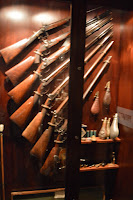
I especially liked the  plates and was able to look at the old rifle section with a bit of experience from seeing similar ones in France.

Somehow I didn't notice much in terms of paleontology and prehistory such as all the moas and fossils. Maybe they moved them or reduced the size of the exhibits. 

They had a temporary exhibition about one of Chrichurch's important past photographic studios. No doubt some visitors may have recognised themselves. I was more interested in a photo that showed High Street around the time of my late childhood and adolescence.

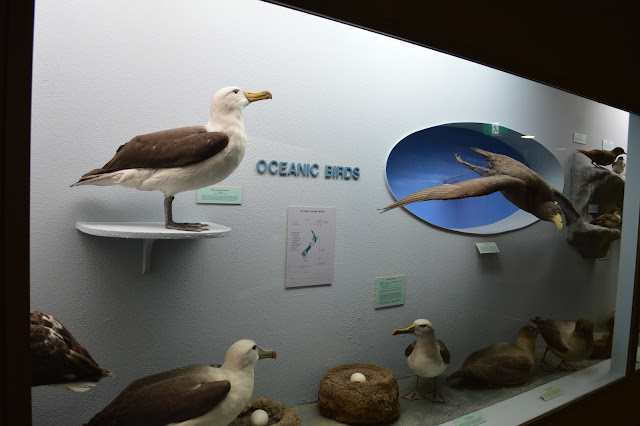
You can meet animals from all over the world in Fur, Fangs and Feathers. While I thought the exhibits were of very good quality I wondered what the point was in displaying stuffed animals from other parts of the world. I don't think we ever had lions and bears here in our breakaway from Gondwanaland. Quite a lot of space is given over to this. I would rather have seen more on NZ natural history. Perhaps this is only a semi-permanent exhibit?

 However, there are some of the tried and true exhibits I remember from my childhood STILL on display. They are timeless. Some joker had put a toy Christmas gnome in one of the exhibits. Rather incongruous and jarring so I couldn't really take a photo of the display.

The geology bits are rather shoved to one side and look like an after thought though quite interesting in view of the seismic activity Christchurch has been subjected to in the past 11 years.

A great deal of space was given over to a rather odd exhibition by a photographer with an odd bent for the bizarre and somewhat deranged. it was set up so that visitors could insert themselves into the scene and take pictures of themselves. I didn't though I imagine some visitors would enjoy this - Isolation Hotel is a multidisciplinary work combining photography, performance, installation and set design. Heather Straka, an Auckland-based artist, has recreated the look and feel of a 1930s German hotel foyer, once opulent and now run-down. I found it, again, rather incongruous inside the museum, taking up such a lot of space too. It's temporary so I don't know what will go back in its place.

I enjoyed the display of period furniture.It doesn't have much that is truly old though. Most is barely 100 years old. I could recognise household items (non-furniture) my grandmother had.

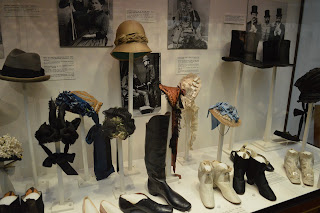
It was good to see the costume section with day-wear and evening-wear as well as military and clergical dress.

Around a corner I was surprised to come across an excellent exhibit on what it was like to have your photo taken in Victorian and Edwardian times. Nicely dressed display with genuine artifacts.


No doubt I will pop back to the museum another time to see if they have moved things around and brought out new/old bits from storage. It's an imimate place full of interesting info and things to see. It doesn't have to be impressive to be enjoyable.


Sunday, 16 January 2022

Preparing for Open Heart Surgery

 I have a severely leaking mitral valve. Every time my heart beats much of the blood pumped from this valve between the left atrium and left ventricle flows backwards, requiring my heart to exert itself much more than it should. The left atrium receives oxygen-rich blood from the lungs and pumps it to the left ventricle through the mitral valve. The left ventricle pumps the oxygen-rich blood through the aortic valve out to the rest of the body. This would explain why  throughout my life my body never felt fresh and energetic. There is a significant murmur and I am now very fatigued, sometimes dizzy and have long-lasting palpitations. I have been told I need Open Heart Surgery now. Here are the things you need to prepare for Open Heart Surgery.

 A little over three months ago I had a meeting with the cardio-thoracic surgeon who would be sawing through my ribcage, putting me on bypass and stopping my heart to replace the defective valve. I was told I would need to choose between a mechanical or a tissue valve. Both options have post-op issues. Originally leaning towards a mechanical valve I changed my mind after doing considerable research. I have since signed the consent form for this, had an angiogram, spent a fortune on drafting a new will and enduring powers of attorney, and compiled an Advance Directive with the support of my GP in case things go wrong now and in the future. I have discussed all this with my daughter so she can understand what decisions to make on my behalf, if necessary. I hope she never has to use these documents (all except my will are available to medical staff throughout NZ to refer to) but we should all be responsible parents to help our children deal with bad things that inevitably come along. I considered contemplating my possible demise or incapacity part of my pre-op preparation.

I also met various surgical registrars including the one who will be wiring my chest back together and sewing me up, as well as a number of nursing specialists.

In addition, you must have a clearance letter from a dentist confirming there are no outstanding treatments such as cleaning, fillings, loose teeth, gum disease likely in the next six months as dental issues can result in serious cardiac consequences including death. I have done everything possible to be ready for surgery at any time.

Another part of the prep was having lots of blood tests, height, weight and blood pressure regularly recorded and also undergoing a transoesophageal echocardiogram

TOE or TEE transesophageal echocardiogram is done by inserting a probe with a transducer down the esophagus. This provides a clearer image of the heart because the sound waves do not have to pass through skin, muscle, or bone tissue. Echo shows the size and shape of the heart and how well the heart chambers and valves are working. Echo can pinpoint areas of heart muscle that aren't contracting well, detect blood clots and guide treatment for arrhythmias (abnormal heartbeats) and many other heart conditions.

Risks

  • Damage to the esophagus, including bleeding or a tear (very rare)
  • Reaction to the medication used to relax patients during the procedure, including nausea and difficulty breathing (see my recollections below)
  • Sore throat after the procedure
  • The doctor will explain the procedure and offer the opportunity to ask any questions about the procedure
  • You will be asked to sign a consent form that gives permission to do the test.
  • Fasting prior to the procedure is required. 
  • Notify the doctor if you are allergic to or sensitive to medications, local anesthesia, or latex
  • Notify the doctor of all medications (prescription and over-the-counter) and herbal supplements patients are taking
  • Notify the doctor if you have a history of bleeding disorders or if you are taking any anticoagulant (blood-thinning) medications, aspirin, or other medications that affect blood clotting. It may be necessary to stop some of these medications prior to the procedure
  • The doctor will require a blood test prior to the procedure to determine how long it takes the blood to clot. Other blood tests may be done as well
  • Notify the doctor if you have heart valve disease, a congenital heart condition, or a history of endocarditis (infection of the heart valves) as you may need to receive an antibiotic prior to the procedure
  • You receive a sedative prior to the procedure to help with relaxation. Patients need to arrange transportation after the procedure

My recollections are as follows: 

A luer or IV was inserted in my arm. I was wheeled to a small room where I was asked to hold a very viscous liquid in my mouth for at least 2 minutes and to gargle where possible, after they had already sprayed the back of my throat with an anaesthetic. I was then told to very slowly allow the gluggy stuff to slide down my oesophagus. 

I had to then turn onto my left side and a plastic mouth piece with a hole in the middle was inserted into my mouth. This can make you feel anxious, claustrophobic or make you want to gag because you know what's coming next. Fortunately they have the strong sedative kick in at this point. A tube with an ultrasound transducer is then pushed all the way down your throat and food pipe until it lies behind the heart (see links to detailed videos below).

I gradually woke up in the cath lab. I expected to be able to go home around lunchtime. Ha! They gave me a sandwich and a cup of tea. That was great as I hadn't had anything to eat for 15 hours. They took out the IV line. The registrar simply said that doctors were debating now whether to repair or replace the valve. Hey? I said I had always been told it was too severe a situation for repair and that I did not want a repair that would only last a few months or a year before I would be opened up again. " We wouldn't do that to you," said the registrar. But I know perfectly well repairs don't always hold well even though a good repair is preferable to replacement. I have received no details on my TOE/TEE at all. 

As I stood up to get dressed I became very dizzy and disoriented and vomitted rather violently. Nursing staff said no way could I go home like that as I was having a bad reaction to the anaesthesia. The nurses said I must have a new IV put in (I hate those painful things) so they could pump liquids into me asap to flush out the toxic sedatives and rehydrate me. After five additional hours I was wheeled down to the hospital entrance to be picked up and taken home, clutching a plastic container for my nausea. Sick as a dog it took about 48 hours to come right at home.

Open heart surgery is not for the 'faint-of-heart'. Yeah, silly joke but true. I have joined the Zipper Club on Facebook which is a group of people having OHS or their loved ones are living through it. While it may seem routine major surgery these days things go wrong more often than you would think and there can be some distressing ongoing consequences for some patients. I am pretty clued-up now on these.

Living alone as I do with no deep emotional relationship to lean on nor family nearby, spending most days of the week without human contact makes dealing with such a major event emotionally challenging. I have still not received a date for the surgery which I would have expected by now. I cannot plan to do anything, no-one feels they can count on me being around to play my bass and as a result musical opportunities (my lifeline) have evaporated. I am in limbo, indefinitely is how it feels. I try to see each day of this current life as a bonus and enjoy my sternum being pain free with no massive scar but I can't humanly keep that thinking 24/7. This situation is certainly one of the biggies for me.
Very quick snapshot https://medmovie.com/library_id/3190/topic/cvml_0186i/

For those of you interested in medical/scientific  details   https://www.youtube.com/watch?v=IU3TRfnO7tI

Saturday, 18 December 2021

New tooth for Christmas

 All I wanted for Christmas was a new front tooth. Ten long months ago, on Waitangi Day, one of my front teeth snapped off. It had been crowned and then recrowned (due to a poor initial piece of dentistry) but had seemed perfectly solid. Alas, the peg inside was not.

I've gone through implant surgery, bleeding issues, gagged daily on my ghastly temporary tooth, faced my friends looking like the Wicked Witch of the West and so I have been keen to complete this lengthy, painful and expensive process.

Following discharge by the surgeon, I was then back in the hands of a dentist. I was told to come for an impression (mould) to be taken so that the new prosthetic tooth could be created. That should be easy I thought. Sigh! Will I never learn?

As I sat back in 'the chair' the dentist told me I would need local anaesthesia. Heh? I was not happy as I find this really painful, even though it may be necessary, but this time I wouldn't work out why it might be necessary. The healing cap would be removed, a long screw inserted into the implant while the mould was made and then everything reversed. No surgery was required. I felt every one of those injections all around the screw/implant socket, leg-trembling stuff. Taking off the cap and popping in a screw was easy. I was told the mould would take a while and the dentist would be jamming it in place and then holding onto it, my mouth would fill with impression and I would want to gag. "Please don't move or gag, just concentrate on even breathing to get through it," said the dentist.

It seems this sort of impression is more complicated than that needed to create a standard crown. The dentist inspected the end result and declared it useless - there was an air bubble. We'd have to start again.

I was starting to gag and cough this time, towards the end of the process. Then the lower jaw was moulded to get my 'bite' right. Xrays were taken and the moulds sent off the prosthetics laboratory where my new ceramic tooth would be made. The dentist informed me I would need to go to the lab and have them colour-match to the rest of my teeth. My painful gums and socket did exactly that the following day.

The dental technician was nice and knowlegeable. He showed me my moulds and explained the work is very technical and must be precise to the last micron. Every step of the implant process must be precise. Just the right amount of space needs to be on either side of the tooth to allow flossing, it must be at the right angle and the tooth needs the correct alignment with its neighbours. My bite is very close so I will effectively be biting on the location of the screw and socket. Because of this, the sexy veneer could only be applied to the front of my tooth.

The day came when my new tooth could be fitted. More nasty needles. The cap was removed again and the new tooth and screw were inserted, Considerable pressure was applied to secure everything in the socket. It was uncomfortable but this faded within 30mins. I was told my gum would turn white [which it did] but would gradually return to pink. The tooth colour was good and it fills the space well. I cannot say it looks exactly like my original tooth at age 17 before a Christchurch dentist massacred it. The gumline is not the same, the angle isn't either and there's a back section that annoys my tongue as it juts out further into my mouth than my natural teeth or crowns. 

However, it is permanent, I can eat what I want, I will not be gagging on a partial plate and I no longer look like a witch. I will be able to eat normally in front of others. I will also be able to go back to singing. Having this 'almost normal' option is likely to be the best way to protect my current and future heart health. 

Right now my gum and socket are pretty sore but that will subside. This is an horrendously long and expensive process and, for me, has not been without pain and trauma. It is not for the faint-of-heart but if you are a long-term planner and persistent it can be a good option.

For info on earlier posts detailing the beginning of this process check out posts for the past 4-5 months.


Saturday, 27 November 2021

Bloody dentistry - implant complications

 I waited three months from my tooth implant surgery for a followup consultation to determine if the implant was successful. How do they do that? I thought it would be through some sort of Xray. Ha, too easy!

The maxillofacial surgeon put a tool in my mouth and seemed to be ratcheting away at the implant. " You might hear a clicking," he said, Well, yes, I certainly felt it too but it wasn't painful. "That seems to be holding," he said. Thank goodness for that after all the wrenching, I thought. He then informed me that my gum had grown over the implant a bit and would need to be trimmed off. I would need local anaesthesia. Always painful, those ones through the roof of the mouth are particularly bad. 

I reminded him about my defective heart valve. Well, I would have needed to be on antibiotics before my visit but now it was too late. How was I to know? Nothing for it but to do it intravenously. My heart sank. More pain and difficulties as my veins are finely engineered. He totally failed in his attempt to put a luer in my right arm. Better try the left one next. After some anxious moments he finally got that one. It took a fair bit of time to get the antibiotic in, in small increments.

The procedure was 'mostly' painless, no stitches and an Xray was taken. Time to take out the luer. The surgeon had his nose in his computer and the nurse had immediately walked out of the room. A bit more care was needed as I had to draw the surgeon's attention to the stream of blood running from my arm, down the chair and onto the floor. Surgeon called the nurse back to clean it up and apply a bit more pressure on the puncture site. I was discharged completely and sent home but my mouth was full of blood as I drove home and my jersey was stuck to my arm from leaking blood. Hmm.

As the hours ticked by the bleeding did not stop and my mouth was full of 'raw liver' clot. I was unable to eat or drink anything. All I could do was shove tissues in my mouth and distract myself by playing bass. Dislodging the tissues meant dislodging the clots. It wouldn't stop but I thought going to bed might be a good thing. Using an old pillow and a towel I tried to sleep but the 'liver," now very thick and fibrous, kept growing, along with the bleeding. I could no long talk so I wrote a cry for help on some paper and at 2.30am the next day I knocked on my neighbour's door. We contacted healthline who recommended going to A & E at the hospital.

A & E did not seem busy yet I had to wait in acute care for hours, bleeding. Nursing staff seemed intent on their computer screens. Not much else was happening. Eventually a doctor found me. He wanted blood tests done but insisted it must be done through an intravenous line. I'd had more than enough needles by this stage but I had to comply to check my blood was clotting OK. The nurse had trouble coaxing my terrified vein but we got there. Bloods were normal. A bizarre bruise appeared on my arm, some distance away from the IV. The doctor hadn't seen that reaction before so we ignored it. 

The doctor then took a look in my mouth. "I think the bleeding is slowing down but I'm not touching that clot, too risky," he said. "This is specialist surgery and I don't know anything about it," he said. I needed to wait a few more hours for outpatients dental department to open so, complete with IV still in my arm and my box of tissues I had to walk myself down the road in the cold wind to the big orange building. Check in and wait for a space.

The dentist on roster did not want to do much with the clot either. "I think it has stopped now but I won't touch the clot except to tidy up around it so you can drink something as you'll be dehydrated after nearly 20 hours of no food or drink." Sucking through a straw proved to be a bad idea so I suggested I drink on the opposite side via cup. Never has a juice been so appreciated.

My neighbour kindly came and picked me up and drove me to the chemist where I filled a prescription for tranexamic acid in case bleeding took off again. I could eat only liquid food, such as melted ice-cream and cold tea for a couple of days and then gradually got back onto my usual diet by day 5. I let the surgeon's office know there had been a problem and looked forward to an appointment with a dentist to complete the implant process.

More on that later.


By Alexmit art - Own work, CC BY-SA 4.0, https://commons.wikimedia.org/w/index.php?curid=99733632

Credit source of photo of implant scew in situ to show what an implant looks like at initial surgery. https://burbankdentalimplants.com/shaping-and-forming-gum-around-front-teeth-dental-implants-ramsey-amin-dds-reviews/  

Not the same as my gum tidyup episode.

Saturday, 9 October 2021

How to hang a tapestry

Most Kiwis have probably never seen a large tapestry, certainly not one in the style of 16th-17th France. I've seen and admired so many hanging in museums and chateaux in France. Jean-Claude had stored a hand-made tapestry, made by his mother over the span of two years, in his attic. He decided to give it to me as he knows how much I appreciate French history and culture. But, how to get it to me? He realised he should have thought to give it to me when I was organising my move back to NZ in 2017. We both knew that trying to send it in it's framed form would now be prohibitively expensive. 

The decision was made to take it off its mounting frame (not an easy task given the length of time it had been mounted by JC's DIY skills), have it cleaned and then post it to me in a standard international posting box. The tapestry had been superbly needlepointed in wool and was flawless so I was thrilled. I knew I wanted it in my bedroom. Hardly able to contain my excitement, I waited for the process of getting it to me to be completed.

I asked a neighbour with a fair amount of DIY skills to make me a stretcher frame so I could staple the frame around it and attach it onto the back. He did a nice job of smoothing the frame and we laid the tapestry out onto it but no matter how hard we tried it would not fit. It was no longer rectangular and even. Horrors, the cleaning process had deformed it.

I sought advice from a picture framer who said they could try to stretch the canvas back to being where it should be. First they would build a stretcher frame, then stretch the canvas over the 40mm thick stretcher but, of course the edges folded around would be visibly tatty. I would then have to purchase a  thick custom frame and hope my walls could withstand the massive weight. If you are rich or a museum this is what you would do. I could see a bill of $2000 looming and there would be no garantee it would be  back to right-angles. I also felt it would look too massive for my furniture and the rest of the room. Feeling dejected I left.

Determined to find a solution, I discussed my problem with a Canterbury quilt-maker. She came up with an affordable solution to protect and hang the tapestry but could she get it back in shape? Not completely, she said, as it was badly deformed.

This job was outside her normal expertise but she was willing to try to make it work. It was my last hope. Many weeks later, after misting the tapestry with water and pinning it to her dining room carpet to encurage it to shrink back into shape, reinforcing the damaged canvas edges which were now fraying, and sewing a backing material onto it through which wood slats could be threaded, I arrived to collect my completed wall tapestry.

She had done a great job with the sewing but when I got it home I discovered there was little improvement in the deformation. It was still badly skew-iff by 10 cms with a somewhat buckled surface. My tapestry was now a parallelogram and it could never be stretched in any direction as it was sewn permanently in place. A crushing disappointment that annoys me but I have had to adjust my sense of aesthetics and just appreciate that it was lovely once and still retains some sentimental value to me.

Hanging it was also a mission. Trying to hang something so large with only two of you to do it is really difficult, especially when it is visually deformed to start with. My neighbour and I were tempted to rush the hanging process and consequently it fell down. I was using heavyweight 3M command strips. Instructions say you should leave the backing strips on the wall at least an hour before reattaching the front strips. It works if you do not skimp on this. There are 4 command strips across the back wooden slat along the top edge. It has not been necessary to insert the bottom slat to make it hang flat as it will never be flat and, being sewn into posisiton, will never stretch again. 

What a learning curve:

1. Do NOT dryclean/wash a woollen tapestry. Just vacuum it and hope it cleans up.

2. Do not put any glue on when mounting on a wooden frame as it will be impossible to prevent canvas damage when removing it to post.

3. Unless you are rich, forget about framing your tapestry. Some can be hung over a rod but if it is a raw canvas with raw backing edges which are fraying you need to fold it over and hide the edges so sewing on a backing is necessary.

4. Find a seamstress who will not baulk at the task.


Tuesday, 14 September 2021

Having an angiogram

 When 'bad engineering' means you need to fix a heart problem it is important to know if the rest of your heart is performing well. Mine has probably never performed well due to a mitral valve that never closes properly so the blood leaks out as the chamber never closes. No wonder I got tired playing sport at school. The only strenuous exercise I could tolerate was dancing. For most of my life the leakage was mild. Then, just before I left NZ in 2010 it had climbed to mild-moderate. This year doctors informed me my condition is severe and will require a valve replacement but I could feel myself deteriorating and wanted more detailed info on what was going on. Were increasing symptoms just the failing valve?

I've always been an active person; out and about, dancing in its many forms, gardening, running around after my daughter and working full time, not always office-bound. Keeping my weight down has been a priority since I was 26, when I realised I could no longer just eat what I wanted and get away with it. I've had to endure a lot of criticism and snarky comments from people who did not approve of my careful life-style. No matter, it always seemed the right thing to do to give myself quality of life as long as possible. Yesterday I discovered I was being rewarded for my efforts.

I checked into the day clinic cath lab in the cardiology section of Christchurch Hospital bright and early for an angiogram to look at the state of my coronary arteries, was allocated a bed, signed the forms the nurse had filled out from my answers to her questions and disrobed in favour of the hospital top and bottoms. Hospital nurses had varying degrees of friendliness and thoughfulness but all made sure I was informed and all necessary attention given.

Being admitted to a hospital usually means you have to have a luer inserted into a vein for IV support. I really hate those painful things. A nurse said a young anaesthetist was passing through and could do it for me with a local anaesthetic. Great. He was fast and competent and it really helped. I'd recommend insisting on a local to help the pain of the insertion.

Just in case the doctors have a problem with accessing your wrist for the catheter you get a groin shave on the right side in case they have to insert the catheter there. Fortunately that was not necessary as the groin route is more risky. I was informed that the angiogram would be diagnostic only; in other words if problems were found requiring stents or angioplasty  they would not be performing that.

You then walk to the operating theatre and climb onto the bed. It was a very chilly room with just a sheet on top. A green plastic sheet is then popped on top of you so you can become the team's table for their instruments. A heavy 'apron' is placed on your lower half to stop radiation to that part of your body. Numerous electrodes are placed on you for the heart monitor. This is important because for an unlucky few, 'rust' (highly technical term used by my cardiologist) can get dislodged from your arteries and cause a heart attack or stroke.

Sedation is introduced via the IV and local is injected into your right wrist. That's the painful bit out of the way. Then a liquid is put in that relaxes the artery so it doesn't spasm. They then open an artery in your wrist, insert a catheter and then feed a wire through all the way up your arm , across your chest and into your heart to introduce a marker dye that is shown as a contrast seen by the Xray machine. This machine moves across your chest and effectively killed my field of vision so I couldn't see what was happening on the TV screen. They do the front two coronary arteries, then back out a bit and go around to the back one. Then everything is withdrawn from your artery and pressure is applied to stop the bleeding. They put a clear plastic sort of bracelet, a TR Band, on your wrist which has a pocket of air in it to put pressure on the incision. It stays on for about an hour or two. Gradually, at 15 minute intervals, back in the day ward, a syringe is used to remove small amounts of the air so gradually there is less pressure. 

I was given a sandwich, piece of fruit and as many cups of tea and water as I wanted, to help flush out the dye which is a bit nephrotoxic. In other words, you need to flush out the dye to help your kidneys.

My wrist and lower arm swelled up so a cold pack was popped on top. This helped. It's reuseable so I took it home for use in case of later first aid needs. Better than using a pack of frozen peas. After all the air had been taken off the bracelet was removed and the incision cleaned. A waterproof bandage remains on my wrist for 5 days as it takes time for the incisions (artery and skin) to close.

While this procedure is not pleasant, it is very useful to see if anything major needs to be done in conjunction with my valve replacement. The cardiologist informed me my arteries are great. I was a bit surprised given I have familial hyperlipidemia; an inherited condition where the body makes too much cholesterol. My mother's readings were nearly off the charts and mine are frowned on but I try to follow a somewhat mediterranean diet as a consequence of my years living in France. It has all paid off. Advice? Keep your weight down and avoid alcohol where possible, stay away from drugs and smoking. Be active.  I will continue to ignore pressure from my GP to go on statins. In my case they would pose a risk rather than any benefit. High cholesterol doesn't mean your arteries are clogged. If you need to know for sure, get an angiogram.

I had not received any written instructions before the procedure on what to do beforehand so I had not eaten or drunk anything beforehand. It appears you should take your usual medicine beforehand. They weren't keen on letting me check out when they discovered I live alone. You are supposed to have someone stay with you overnight in case arterial bleeding breaks out. Fortunately I had my procedure early in the day so I stayed a few hours in recovery and then left. You cannot drive yourself home as you are still under sedation effects so a kind neighbour provided transportation. I was told not to make any important decisions or sign any important papers that day, for the same brain-fog reason.

The wound isn't very painful if you don't use it so I tried to avoid using my right hand and arm for the rest of my first day. Sleeping is not a problem and I have managed to avoid painkillers. The day after I am still being extremely careful as the riskiest time is the first 48 hours but I'm clearly back at my laptop.  After a few days I can start to take back my usual activities such as showering and maybe bass playing though bruising will continue for a couple of weeks and I'm currently not allowed to lift, push or pull anything more than 5kg for several days. By two weeks I should be back to normal.

Here's a NZ video on the procedure. Skip the first 2 minutes as it relates to Waikato. https://www.healthnavigator.org.nz/videos/a/angiography-procedure/

The cardio team will decide when and what to do with me as I am in a grey area. Too healthy to need immediate attention but not healthy enough to leave too long. Surgery is needed but we don't know when.

Photo source https://www.southvalleyvascular.com/treatments/angiogram